This is a run-on post containing much of what I have been thinking about this summer while attempting to re-engineer myself to become a better version of how I currently stand.
Personal Context: Tension and Perception
For much of my life, I have had trouble with holding inner tension and not breathing properly. While it didn’t necessarily impair my development, I noticed a difference in how I processed information compared to others. Specifically, I found myself ignoring:
- Expressed emotion
- Holistic features: The ability to judge a situation in context (e.g., navigating a city by “feel” rather than just analytical turn-by-turn directions).
Brain Lateralization
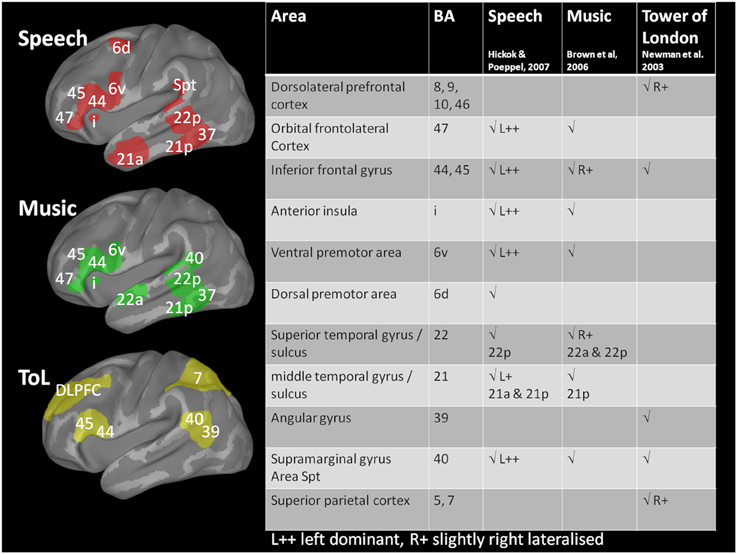
There is a distinct relationship between reading emotion and judging holistic features; both are right-brain activities. Lateralization is an observable fact. You can test this by watching yourself in a mirror:
- Factual Recall (Left Brain): Eyes typically look left (0-90 degrees from the nose).
- Imaginary/Emotional Construction (Right Brain): Eyes typically look right (angle > 90 degrees).
The Wasp Anecdote: Gradual Consciousness
Consciousness likely emerged gradually, evolving from core structures outward. I observed a wasp navigating my garage:
- It found a small opening to scout a nest location.
- When I patched the hole, the wasp repeatedly flew between the nesting site and the blocked exit.
- This behavior required both holistic positioning (knowing where it was) and navigational steps (calculating the route).
Human intelligence is essentially an extension of these same neural circuits, just with significantly more computational power. Some interesting references:
- PubMed Central Study: here outlines learning of language and lateralization in humans
- Wikipedia: here Wikipedia link for broad overview on lateralization
- Frontiers in Psychology: here outlines various ways in which brain lateralization is measured
The Power of Two (Dichotomy)
The concept of division into two parts is a fundamental biological and physical principle:
- Biological: Cell division, reproduction (requiring two parents), and bilateral symmetry.
- Physics/Math: Symmetry principles and binary states (like 0 and 1 in computer chips).
- Pareto Optimal State: A singular state is often unstable and must be balanced by its opposite extreme.
Physiological Impact of Tension
When you are physically tense, you are effectively restricting blood supply to specific regions of the brain.
- Endocrine System: The Hypothalamus regulates the Pituitary Gland based on inputs from various brain regions.
- The Chain Reaction: If the regions controlling the Hypothalamus receive low blood flow due to tension, they cannot compute the necessary signals to regulate hormones at optimal levels.
Form and Function
Blood flow is the essence of one’s being. It is governed by lung size and the organization of blood vessels. Interestingly, one might be able to guess the organization of these vessels by physical traits:
- The shape of one’s chin.
- The lines on one’s hands (which mark the termination points of certain blood vessels).
To be continued…